Why Choose Cleveland?
Cleveland offers major-city amenities within a relatively compact metropolitan core.
Healthcare is a major employment sector. Additionally, manufacturing, education, finance, technology, professional services, and entertainment contribute to the economy.
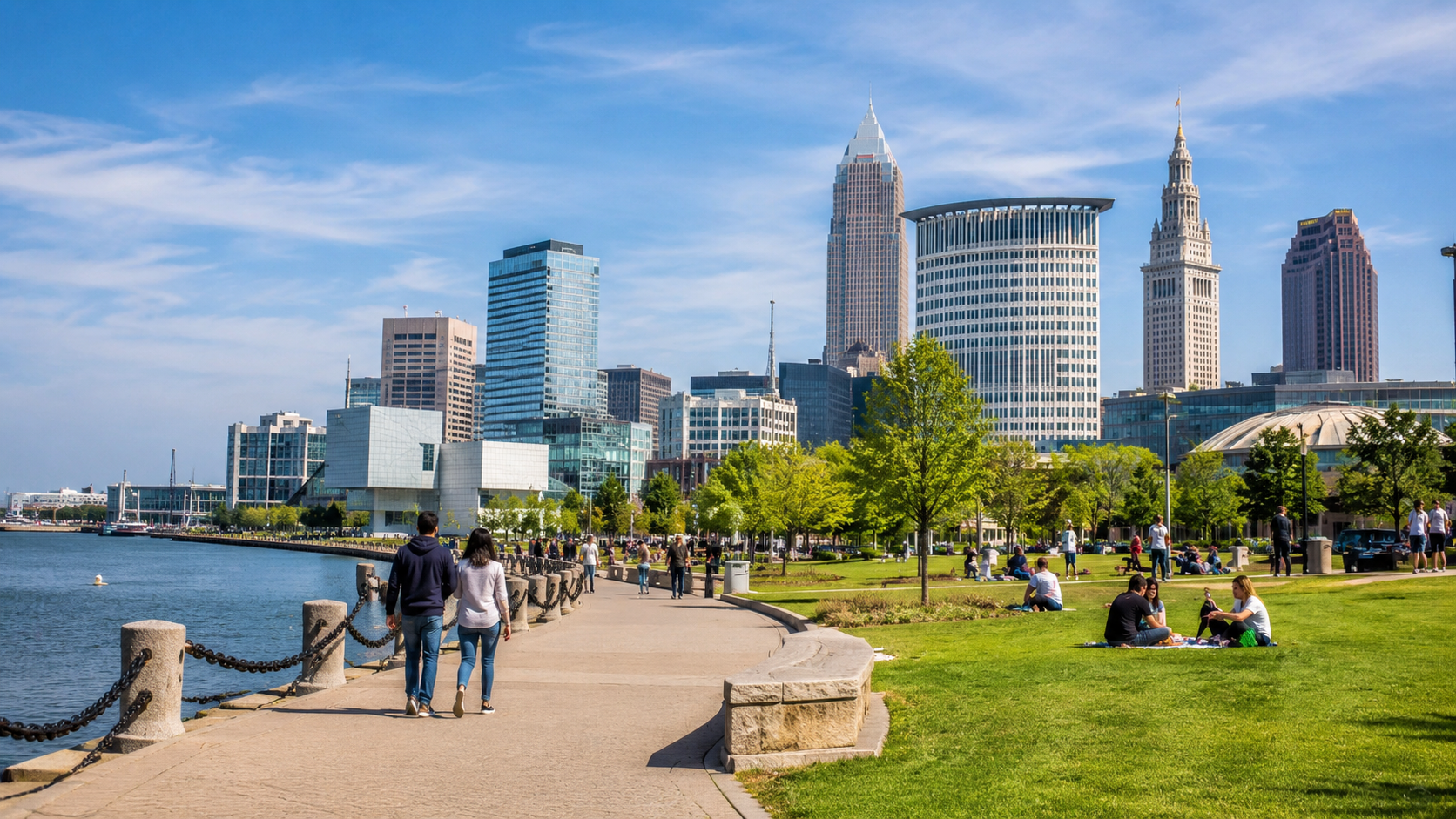
Residents also have access to museums, professional sports, restaurants, theaters, parks, and Lake Erie.
Cost of Living
Housing expenses vary by neighborhood and property type.
Historic homes can provide architectural character. However, older properties may require more maintenance and energy improvements.
Residents should also consider property taxes, utilities, parking, insurance, and transportation costs.
Real Estate and Housing Market
Cleveland offers historic houses, apartments, condominiums, townhomes, traditional detached homes, and loft-style properties.
Downtown Living
Downtown apartments and condominiums place residents near sports venues, restaurants, entertainment, and public transportation.
Nearby neighborhoods provide additional urban housing choices.
Ohio City and Tremont
These neighborhoods combine older homes with restaurants, local businesses, and renovated residential properties.
Walkability can be stronger in these areas than in many outer neighborhoods.
Residential Neighborhoods
Other sections provide quieter streets, detached homes, yards, and neighborhood parks.
Therefore, prospective residents should research Cleveland one neighborhood at a time.
Education
Cleveland Metropolitan School District serves families throughout the city.
Families can still enroll students for the 2026–2027 school year. The district also offers a School Finder and school-selection options.
School programs and transportation eligibility can differ. Therefore, families should research options before choosing housing.
Healthcare Facilities
Healthcare is one of Cleveland’s defining strengths.
Cleveland Clinic’s Main Campus is located on Euclid Avenue. The facility operates around the clock and provides extensive specialty services.
Additional hospitals and medical systems serve the broader Cleveland area.
Recreation and Leisure
The City of Cleveland owns and operates 160 parks and 20 recreation centers. Facilities include playgrounds, athletic fields, pools, and specialty recreation areas.
Lake Erie Recreation
Lake Erie shapes much of Cleveland’s recreational identity.
Residents can access beaches, lakefront parks, trails, boating areas, and scenic waterfront destinations.
The larger Cleveland Metroparks system provides even more outdoor options throughout Northeast Ohio.
Dining and Shopping
Cleveland offers distinct restaurant and shopping districts.
Ohio City is home to local dining and the historic West Side Market. Tremont also provides restaurants and neighborhood businesses.
Downtown, University Circle, and other neighborhoods add more dining, entertainment, and shopping choices.
Events and Festivals
Cleveland has an active annual event calendar.
Events include cultural festivals, One World Day, neighborhood celebrations, concerts, and the Cleveland National Air Show.
Professional sports also create year-round entertainment throughout downtown.
Transportation and Accessibility
Greater Cleveland RTA provides buses, rail service, and other transit options.
The Red Line connects Cleveland Hopkins International Airport with downtown and East Cleveland. Blue and Green lines provide additional rail service.
Interstates 71, 77, and 90 provide important highway connections.
Conclusion
Relocating to Cleveland, Ohio, offers major healthcare, cultural attractions, Lake Erie recreation, and varied neighborhoods.
Housing styles and transportation access differ considerably across the city. Therefore, neighborhood research should remain a priority before moving.